Beginner · 10 min
Aniimo Beginner Guide: What to Expect When You First Start
The capture loop, Twining, Lumin to Nova evolution, Potential grades and Homeland — the systems that decide your first ten hours, and the four mistakes almost every new player makes.
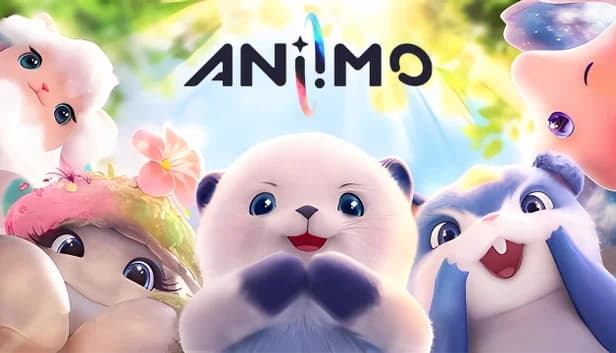
Aniimo is a free-to-play, open-world creature-collection action RPG set on the continent of Idyll. You play a Pathfinder: you catch creatures, you bond with them, and — this is the part that makes it different — you become them.
If you are coming from Palworld, Pokémon or a mainstream gacha, some of the vocabulary will look familiar and some of it will not. This guide walks the systems in the order you will meet them, and flags the four decisions that quietly matter more than they look like they should.
What kind of game this is
Three framings, all true at once:
- An open-world action RPG. Real-time combat, traversal, biomes, weather, day/night. Idyll is a continuous world, not a menu of stages.
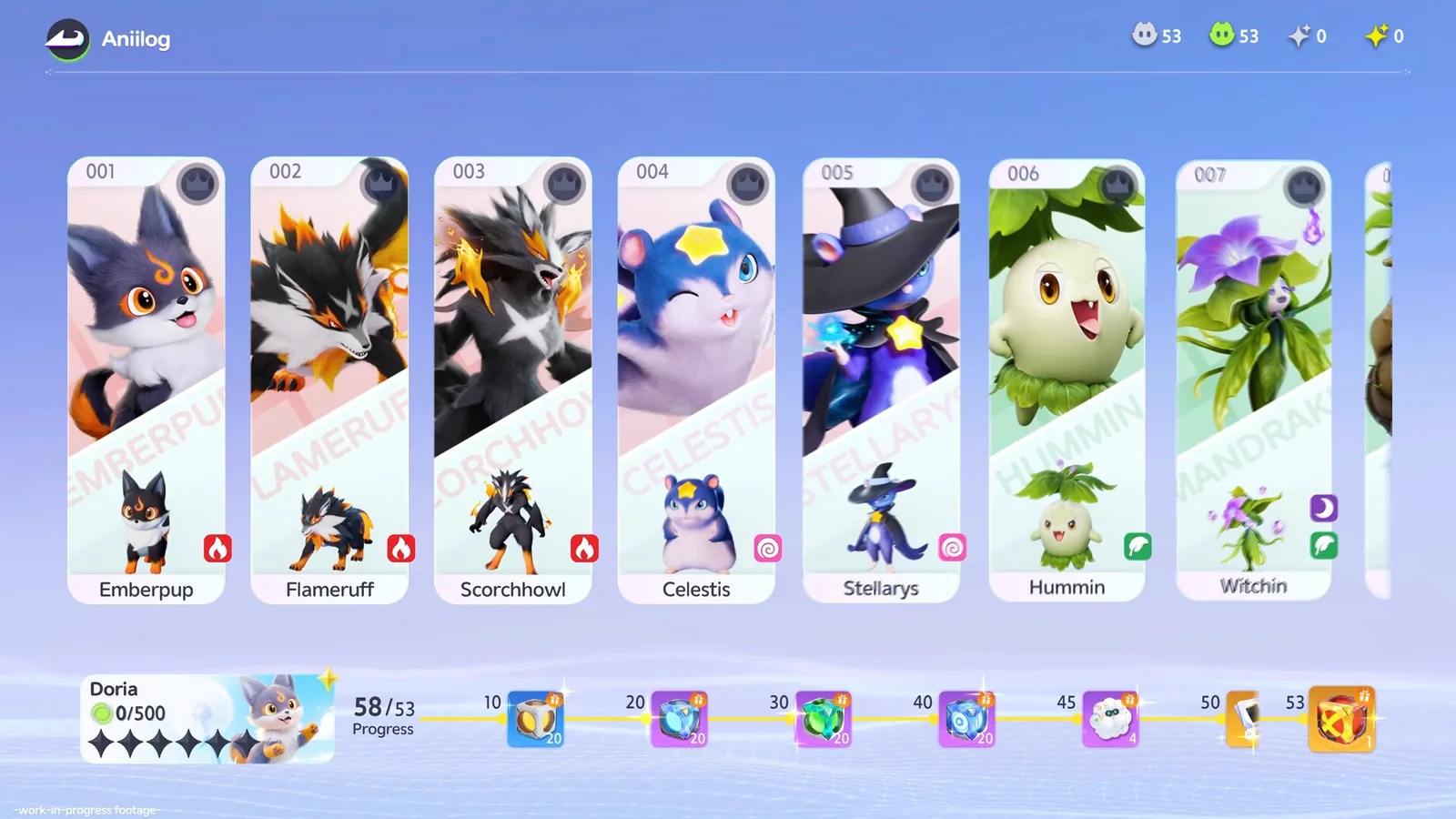
- A creature collector. Capture is done in the field with Aniipods. The index you are filling is the Aniilog, and it is bigger than the species count suggests because 57 lines have regional forms with their own elements and habitats.
- A gacha. Monetised, but weighted toward quality rather than access — Potential grades, Prismana variants and eggs, rather than locking creatures behind a banner.
The practical consequence: you cannot shortcut the world. Your account power comes from playing in the world under the right conditions, not only from pulling.
The capture loop
Catching an Aniimo is not a menu action. You study the creature's behaviour, wait for the right moment, and time an Aniipod throw. Different species behave differently, and the environment is part of the equation.
Spawns respond to three axes that all move independently:
- Biome — forest, coastal, deep-sea, underground and so on.
- Weather — including confirmed interactions, such as rain weakening Fire abilities.
- Time of day — several Dark-element Aniimo are nocturnal.
This is why "where do I find X" is rarely a one-line answer in Aniimo, and why our Aniilog lists element and role prominently: those two fields tell you most of what you need to guess a habitat before the map data is public.
Twining — the signature mechanic
Twining is the mechanic the whole game is built around. Once you have a Twine bond with a captured Aniimo, you do not just command it from a distance — you take its form. You see through its eyes and wield its abilities directly.
Combat therefore has two registers:
- Command mode — you direct your Aniimo, positioning and playing to their kits.
- Twine mode — you become one of them and use its movement and combos yourself.
Beginners tend to treat Twining as a damage button. It is more useful to think of it as answering a question: what do I need right now?
- Traversal Twine — mobility first, damage second. Wind-element Aniimo carry most of the traversal value in the roster.
- Puzzle Twine — transform, read the environmental feedback, swap again. Idyll's puzzles frequently expect a specific elemental interaction.
- Combat Twine — enter with an exit plan and a second role ready. Twining into a DPS with no way back to a Heal unit is how early deaths happen.
The habit worth building from hour one: before you transform, name the outcome you want — cross terrain, trigger an interaction, dodge pressure, or convert an elemental opening.
Roles and elements
Every Aniimo has one of five combat roles — DPS, Break, Support, Heal, Regen — and one of nine elements: Fire, Water, Grass, Lightning, Earth, Wind, Dark, Ice and Light.
Roles matter more than elements early on. A squad without a Break unit cannot reliably create stagger windows, and a squad without healing cannot hold a longer fight regardless of how much damage it does. The traditional Fire / Water / Grass / Lightning counter relationships are confirmed to be present; the full nine-element matrix has not been published, so we mark it TBD rather than reprinting a guess.
Our team compositions page lays out working templates by role rather than by named unit, which is deliberately more durable pre-launch.
Evolution: Lumin → Gamma → Nova
Aniimo evolve through up to three stages: Lumin (base), Gamma (mid) and Nova (final). Not every line has all three — plenty go straight from Lumin to Nova, and several confirmed creatures only exist at Nova stage in the current data.
Crucially, evolution is multi-branch. Some lines fork based on the material you feed them, and the branches can land on different elements entirely. Pebbling is the clearest documented case: it can become the Earth-element Geodeback line, or the Fire-element Lavazar line.
Beginner advice: do not rush an evolution just because the material is available. A branch is a decision, and the branching evolution material in the pre-order packs exists precisely because those materials are not trivially farmed.
Potential, traits and Resonance
This is the layer most new players discover twenty hours late.
- Potential — an appraised quality grade running from Common up to Perfect. Two identical species are not equal.
- Traits — four MBTI-style personality axes, each pushing specific stats.
- Resonance training — a per-creature progression track from level 20 to 60, consuming three tiers of Astranites (Basic, Standard, Advanced).
The interaction that matters: Astranites are finite, and Resonance is per-creature. Pouring Advanced Astranites into a Common-Potential creature because it was the first Nova you caught is the single most expensive beginner mistake in the game. Appraise first, invest second.
No numeric stat values are public yet. Anywhere you see hard numbers for Potential bands or Resonance gains before launch, treat them as unverified.
Homeland and the Hatchinator
You get a personal base — an RV that anchors a customisable Homeland where you plant crops, gather resources and build automation. It is also where the Hatchinator lives.
Eggs are the second acquisition route alongside field capture, and they run on real-time incubation timers. The Homeland Hatchinator has a Caress function that instantly completes an egg's timer — a single Caress has been observed completing a ten-minute incubation, with a documented limit of 20 uses (the refresh cadence is unconfirmed, likely daily). When an egg is ready you interact with the Hatchinator and follow the prompt to pet the egg, and the creature's role, element, stage and quality are revealed in sequence.
Eggs are the second acquisition route alongside field capture, and the Hatchinator is where they turn into creatures — so an idle Hatchinator is wasted real time.
Your first ten hours, in order
- Link your accounts before the tutorial. See the Pre-Order Q&A.
- Catch broadly, not deeply. Aniilog entries are progression. Grab everything you see, even duplicates — Potential varies per catch.
- Get one Break unit and one Heal or Regen unit early. Your first wall will be a stagger check or a sustain check, not a damage check.
- Set up the Homeland as soon as it unlocks. Incubation runs on real time — an idle Hatchinator is wasted hours.
- Start Twining deliberately. Use a Wind unit for traversal and keep a second role ready before you commit in a fight.
- Do not spend Advanced Astranites yet. Wait until you have appraised enough creatures to know what a good Potential roll looks like.
Four mistakes to avoid
- Skipping the account link. Costs you your save, or a support ticket.
- Investing Resonance materials into your first Nova. Costs you the finite resource that makes your eventual best creature good.
- Evolving a branching line on autopilot. Costs you the branch you actually wanted.
- Playing at one time of day. Costs you access to nocturnal Dark spawns and to Prismana weather windows entirely.
Next steps: browse every confirmed creature in the Aniilog, plan a squad on the team compositions page, or see who ranks where in the tier list.